
A Time in the Mountains

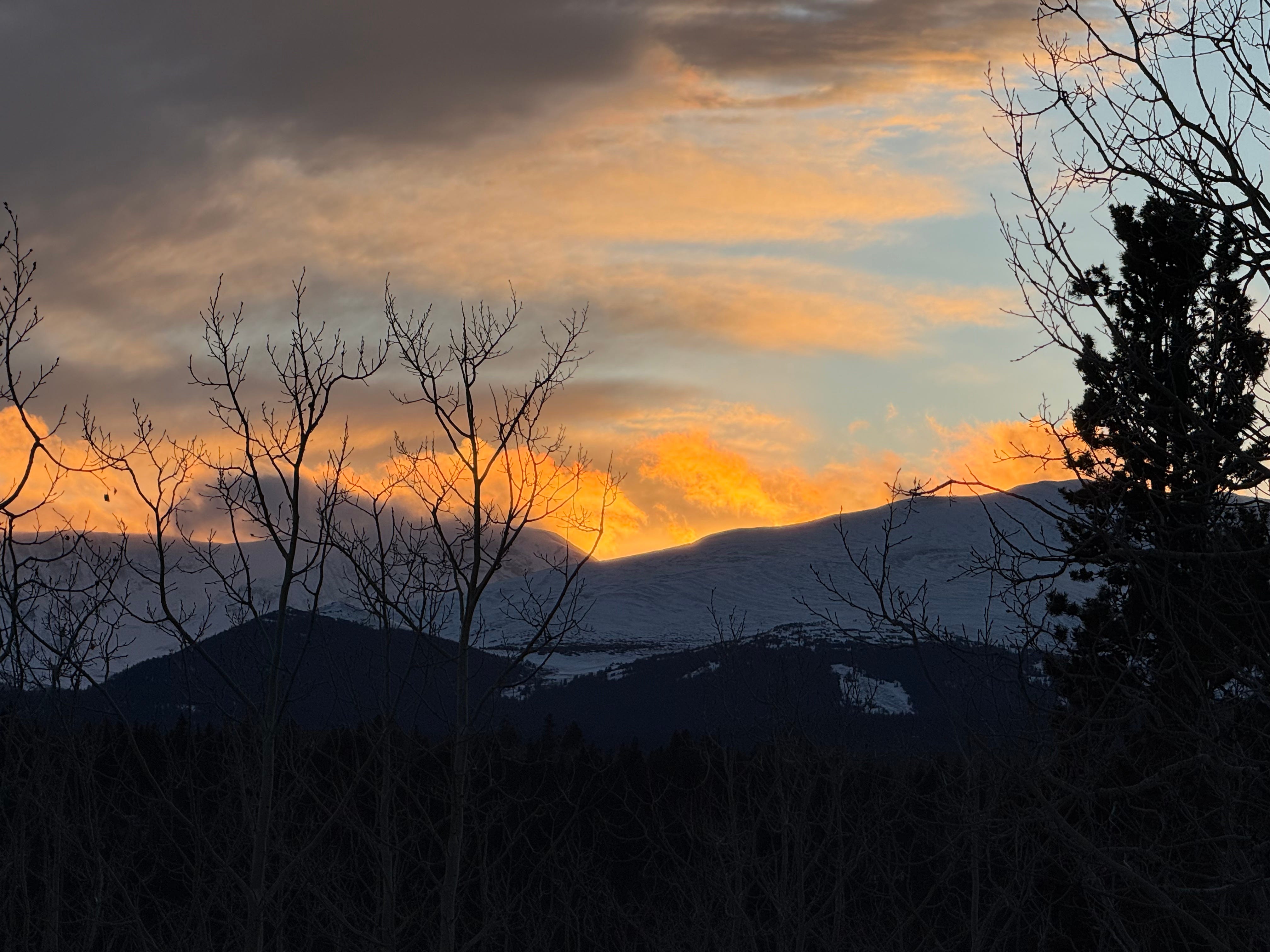
After the holidays, January grew strange. I was in the mountains, trying, with the sensation of swimming against a current only slightly stronger than I was, the distance slowly growing. Some things did get done, “failure” seems too strong, almost self-dramatizing, you’re old enough to know better, what do you expect?
One of the things that got done was I edited Hyun Woo Kim’s fantastic book, The Great Leader and His Eternal Life. The story line, plot, characters and so forth are all masterful. But American English is an insanely rich and irrational language, and not his mother tongue, so I had the difficult yet delightful honor of wordsmithing the text. You can read warm words from a host of ms readers, including me, here.
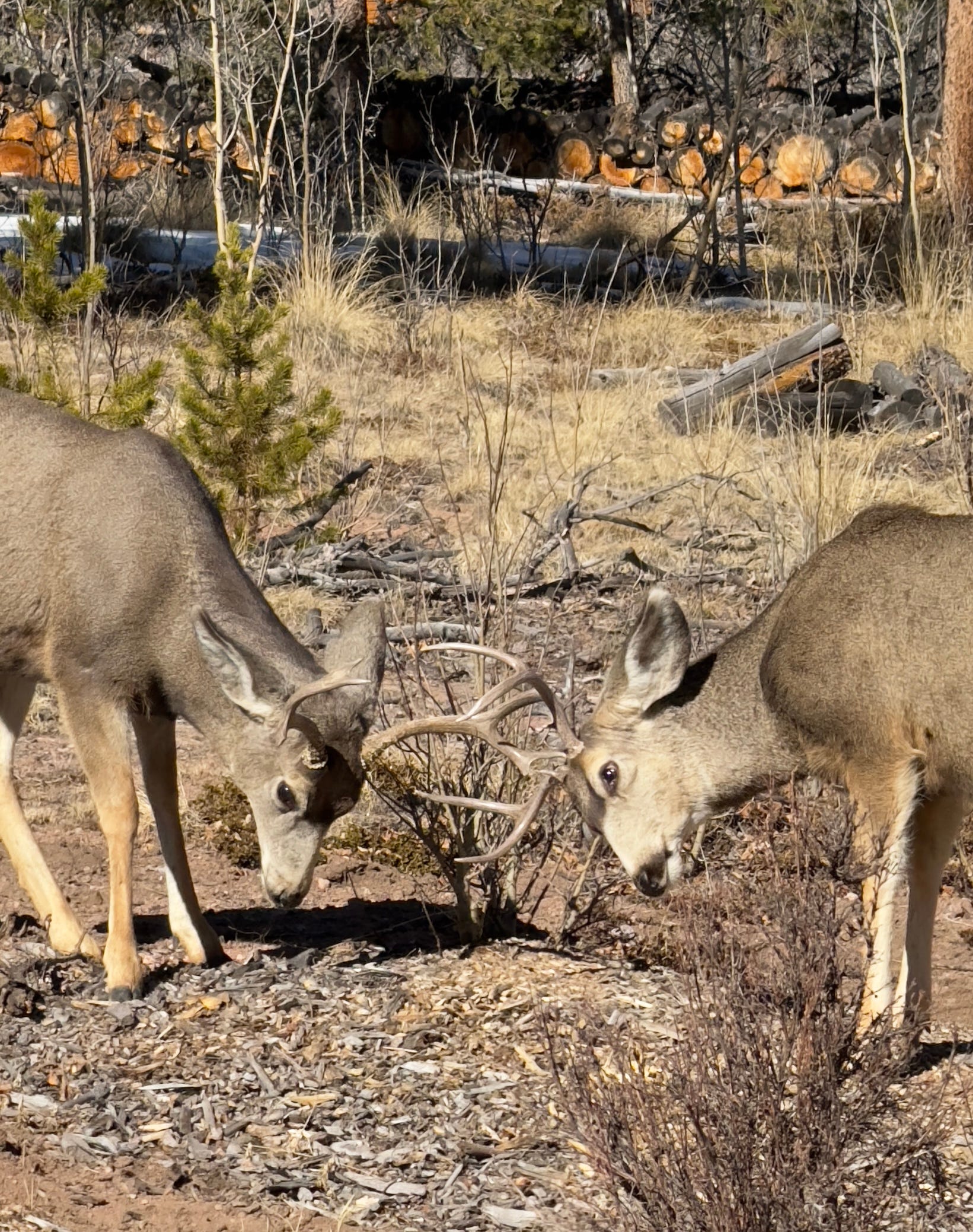
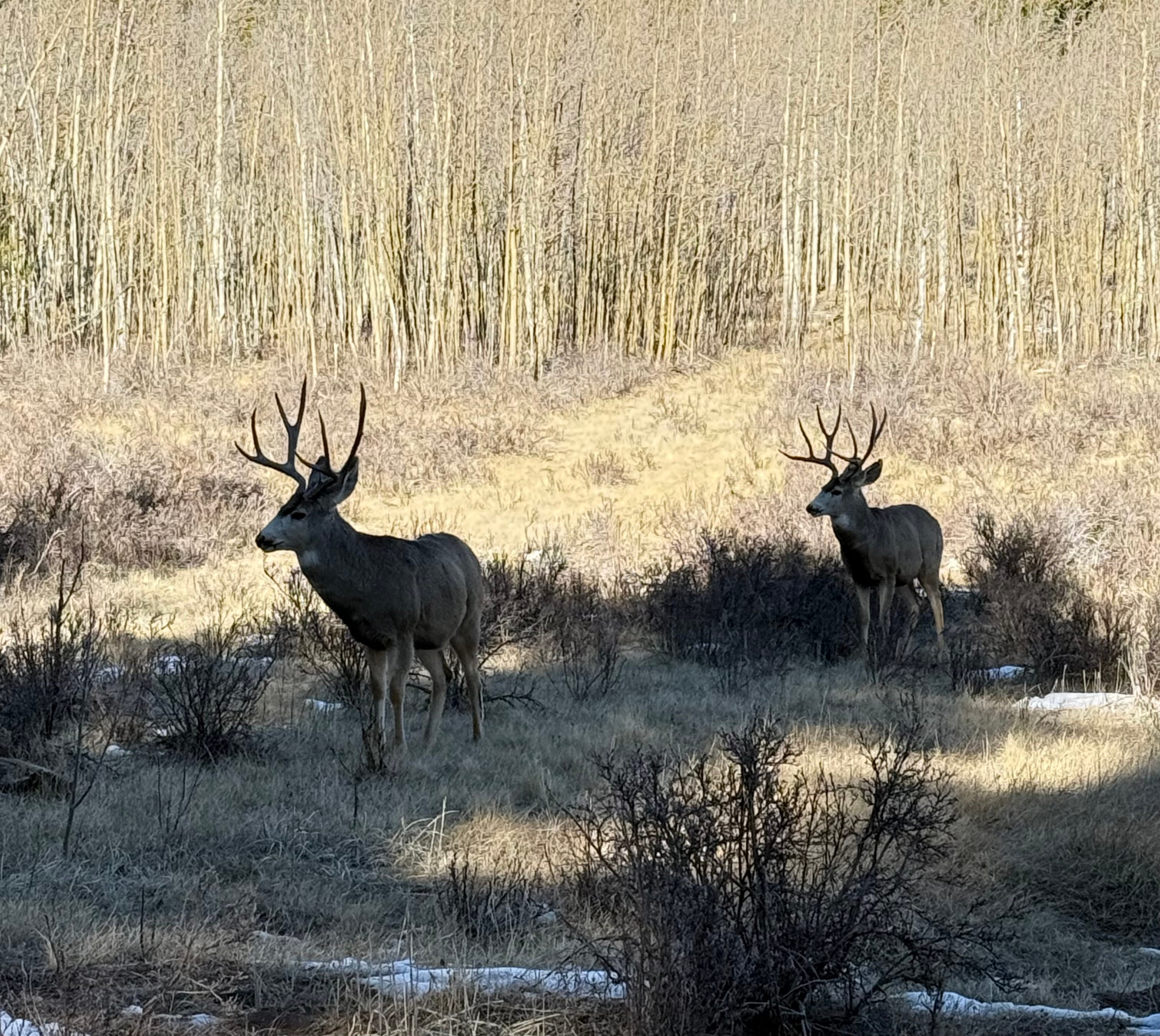
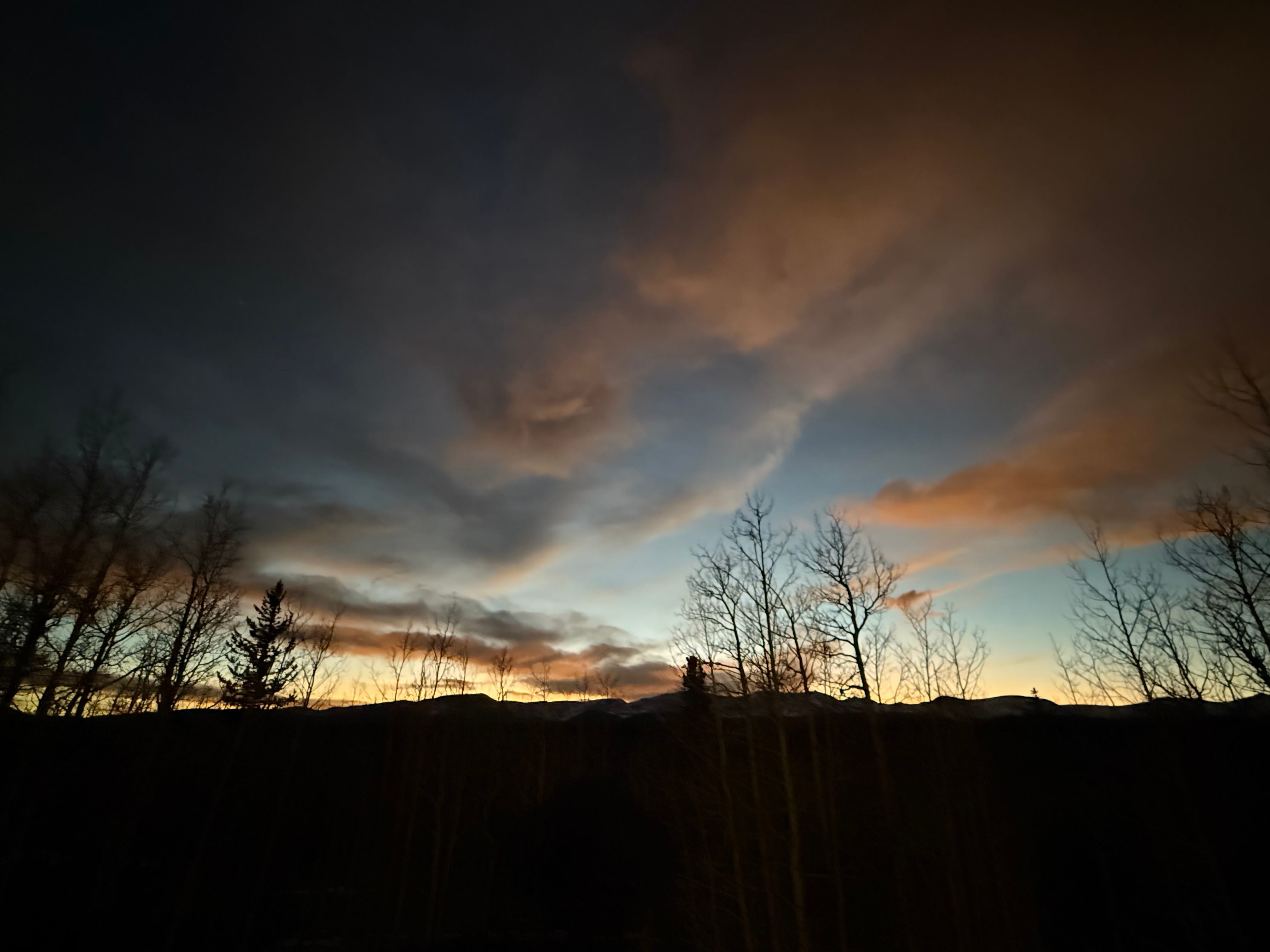
The drought continued. It snowed occasionally, but not enough to amount to much. There’s not really a pack, not here at over 10,000 feet, and not much higher. There is a little more snow on the other side of the range, as always, but they’re historically low, and that’s the Colorado, agriculture for Western states. Perhaps the spring will be wet, but if not, streams and rivers will be low, forests dry, and the danger of fire increases. It’s pretty grim. Over a long morning I took a series of photos, later composed an essay, and was pleased with the result: Elkhorn: True West Dispatch
A few months ago, for our anniversary, my wife organized our library. (I painted the dining room.) A picture of me fell out of a book, belaying somebody on the side of Denali, maybe 16,000 feet. 24 years old, crazy fit. Before law school, before marriage, before kids, before professorship, before published. Another life.
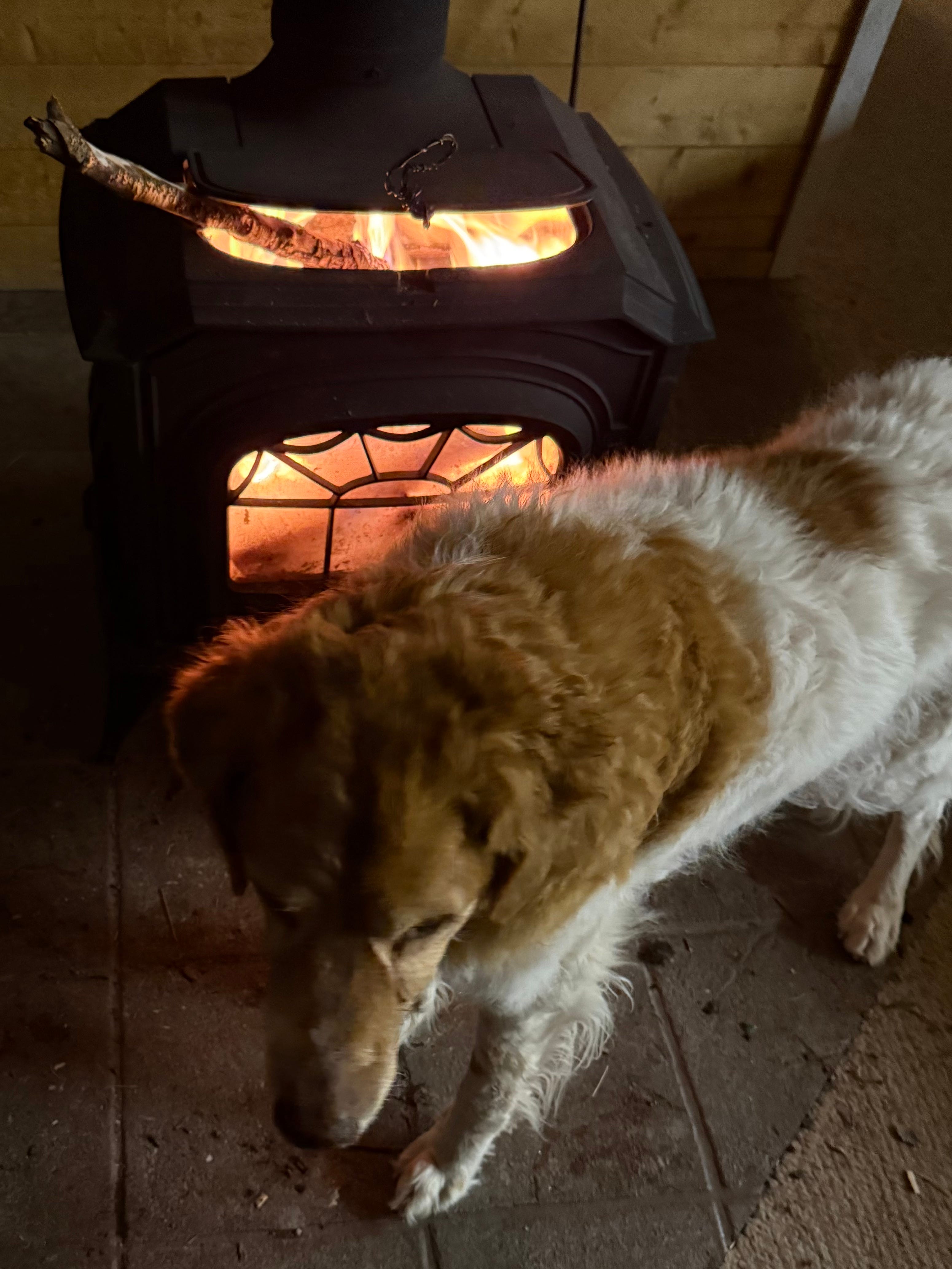
And this month, my 61st birthday came and went, still in high mountains, with just the dogs for company. Impossible not to take stock. My solitude was voluntary, and of course ameliorated by calls and texts and so forth, to say nothing of recreational cooking, decent wine and a good fire. Plus dogs. Blessings recognized. I stayed in the mountains because it seemed important to keep trying, so I continued to struggle, lashed to the mast as it were. This, I think, is the worst part of my job. The constant fight for discipline. At the end of the month, we celebrated several birthdays together in New York City, the coldest winter in years but good cheer nonetheless.
Another thing that got done, or mostly done: the speaker schedule for the University at Buffalo’s NYC Program in Business and Law. It’s a tour de horizon of capitalism, fantastical, really, and I don’t think available anywhere else. The course is taught by experts from a host of practices: leading lawyers, international bankers (Japan, Canada, France, Sweden), the Federal Reserve, alternative asset managers, insurers, politicians and government actors of various sorts (including the Federal Reserve) – the list goes on. As I discuss at length in Social Thought From the Ruins, people want to talk about how their corner of the world works (or does not!).
Can this be theorized? Can we do a better job accounting for, and holding to account, our political economy than the tired cheerleading we get from Palo Alto and Chicago, or the even more tired ghosts of the social tradition? Probably, and I’m going to give a talk in a couple of weeks on this. Can I, will I, write it? What the world needs now is another book, from me? Who reads books?
Meanwhile, Ezra Klein gets something north of $40K for a speaking engagement. Nothing against him, but really? I don’t want to talk about Epstein, too much has been said already. How can someone have 3 million pages released about them? I mean maybe it’s just the pimping and various financial frauds, but somehow the very real crimes don’t seem to be an adequate explanation for the miasma of “influence.” As somebody with a gift for math and a degree of charm, I note that I don’t have such influence! And I don’t think that, if I were only the criminal Epstein was, I would. It’s sort of a mystery. Sam Kahn does a fine job anatomizing the problem. Epstein: A Post in Six Dimensions. Easy solutions are often just that, too easy, obscuring other important things. Something similar happened with Enron (“it was fraud”) and the global financial crisis (“bad mortgages”). True, but with inadequate explanatory power. The Achilles heal of a journalistic culture?
I was recently criticized for wanting prestige, wealth and the like, and that was said to compromise my work. Slightly insulting, factually wrong, but troubling for reasons I’m trying to articulate here. To start, it would be silly of me to deny my own ego, and by most material measures I’ve been reasonably successful. I have a lot of time, as the photography illustrates, and a bit of influence in various circles. But my wife and I have also made choices. We left Washington, and left millions of dollars per year on the table, in order to raise children and write books. The children went very well. The books, meh. Hardly keyed to the academy, for better and worse. And, honestly and for reasons unclear, I expected the books to be more influential. But what I have written, I have written. And that is who we were, and still are. I have many failings, but greed and lust for power are not my sins.
With my own books, it is easy enough to say that the fault is in me, rather than my stars. Perhaps every writer has such doubts; I certainly do. But Epstein, and the slavish attention he received, are just not my fault. And it is also too easy to say that my surprise at the influence wielded by an evil man of modest accomplishments is naïve.
Maybe the culture is just increasingly unworthy? Think how much digital ink is spilled over people who profoundly do not warrant the attention. Here on Substack and elsewhere, writers I respect routinely treat ranters as major thinkers. And how can there be so many people with the energy to follow __________, a so called “influencer,” there’s that word again, famous for being famous? In Novalis, Matthew Gasda is right about the war between Instagram and the writer (even the indubitably cool writer). Maybe the digital age has loosed the full corrosive power of vanity upon the world? Maybe Epstein’s real genius was the arousal and never yet complete satisfaction of vanity, the flying private version of the dopamine scroll?
Be that as it may, the vacuity of our age is astonishing. I am astonished.
And I’m getting tired of the contest. But writers write, even if the age of the independent print intellectual is over, as Mary Harrington is arguing with typical clarity, using Epstein as a hook. Sigh. Beware of Lords and Princes. So yeah, I’ll probably keep writing. The Last of the Mohicans, over and over.
On my birthday I skied, trying to regain my legs after a couple of bad years, my body suddenly unreliable, embarrassingly surrendering to the pharmacological industrial complex like the rest of my class, especially the men. Infuriating, then depressing. Skied what is probably the last race ski I will buy, which I did a few years back before things went to hell, a Salomon X LAB in a baby-GS radius, twin titanium sheets and so quiet. Beautiful ski, relatively approachable for that level of performance, but I don’t now have the strength or the flexibility to really own them. My old race boots, Langes, 130 + DIN, seemed just too much, so I grabbed an adult son’s Atomics, 110s, bedroom slippers.
Half empty/half full. Racing skis at 61 is not nothing. Got in a conversation with some kid, probably early 30s, who generously said I was killing it. Maybe I’ll get some of my old capacity back, but now every big effort seems to come at the cost of something else. I feel the need to husband energy, and that need is new and unwelcome. How important is skiing fast? What will I get done, and what will be left undone?
Writing about skiing requires me to address my mountains (“Annapurnas in the life of men” – Herzog) more generally, and that’s a book, not a Signal. I have a less existential motive, too. Skiing might be a way for me at least to start thinking about and expressing relationships to technology, getting beyond simplistic talk of “tools” or even being embedded or enabled or afforded or determined. The great racer Jean Claude Killy once said that he missed the relationship to his gear. That seems worth development. Should the book on technology be one of the things I get done. Maybe.
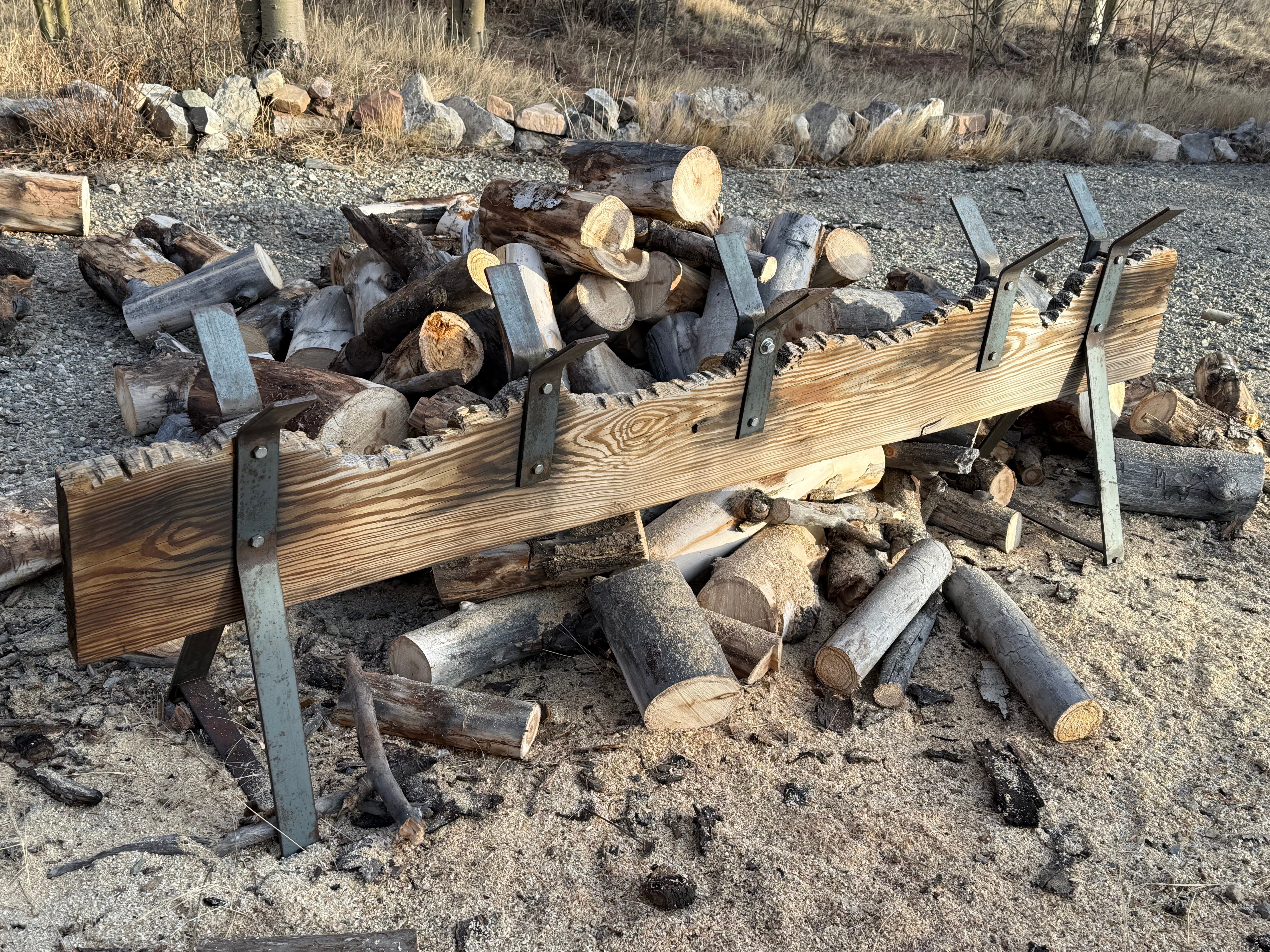
Shorter version, still in the mountains, different technology: I have three chain saws, as well as a couple of circular saws, hand saws, etc., but let’s stick with chain saws. My first is a massive old Husqvarna, a 455 Rancher, 20 inch bar, for heavy farm use, a step below a lumberjack’s saw. I met a retired Husky exec on a lift the other day. We started talking about saws, then concrete saws, then silicosis. Nasty stuff. Husqvarna was founded in Sweden in the 17th century to make weapons (don’t believe what they say about the pacifism of Swedes).
Even when not weapons, chainsaws are quite dangerous, especially when you are in the woods with uncertain footing, slash and snow and limbs under pressure. Sometimes a limb catches you, sometimes something falls on you, and sometimes the saw bucks and comes back at you . . . being a lumberjack is one of the most dangerous jobs. And saws are loud, the dust gets in the throat and eyes, and the vibration is exhausting. The Husky has a two stroke engine, lots of smoke, and both crazy powerful and hard to start and keep running, constantly shifting. It’s fiddly, and so you tend to leave it running while walking and . . . I’m more than a healthy respect for saws, and try not to cut for too long. You get in a rhythm, it’s oddly hypnotic though not pleasant, and next thing you know you’ve made a mistake.
Frustrated with the Husky, I got an electric saw, a Stihl, for cutting stove wood. My wife’s idea. (“Why have two saws that won’t start?”) It’s corded, so I bring wood to near the house, and standing on level ground with a frame, cut and stack there. The Stihl is a little over-engineered, because, well, German. Replacing the chain requires that the steps be followed exactly. But the saw cuts cleanly, no fumes, little vibration, and starts and stops, instantly. So, for most of what I do, the Stihl is a huge improvement. That is, to suggest the philosophical stance I’m trying to attain, my idea is to think critically but not dismissively about technology, allowing for both rejection (as opposed to the supine posture of economists and most technology cheerleaders) and an appreciation of learning, improvement, dare I say progress (as opposed to the reflexive and total dismissal of many critics).
The difficulty with the Stihl, as already suggested, is that it is limited by its power supply. I have a lot of extension cords, but short of dragging a generator, you can’t really get out in the woods, and sometimes I need to clear trail, take down leaners, clean up the driveway, and the like. But lithium batteries have gotten much better, and I now have a Milwaukee which is fantastic. Light, quiet, cuts like a bitch, plenty powerful for most of what I do. More progress. And the battery lasts as long as I should be out there.
Even so, I found myself alone in the woods, evening coming on, trying to break a branch, holding it in one hand and the saw in the other, standing in snow, the branch snaps back and I’m suddenly ass over head in a snowbank. A dog comes and licks my face, no harm done but bad moment and time to quit. This is how injuries happen. I know of people who got killed in their backyards, cutting by themselves, and I don’t usually . . .
I’ve got my eye on a fourth saw, a Stihl with a self-adjusting choke/filter system, designed to be used from 8,000-12,000 feet, but it’s spendy and “it’s ridiculous to own four saws.” Indeed.
Let me close where I began, and maybe express what’s eating at me: January grew strange. I’ve heard versions of the following more than once recently, sometimes a bit drunkenly, but the whole nation is half-drunk. And I am honored. Truly. A good friend wrote:
You should really go into politics. I am not joking. I remember a conversation with Miłosz in Paris nearly 40 years ago. I asked what he thought about politics. He replied that as long as you can avoid it, better not to waste the time of your life with it and indulge in the life of the mind. But he also said sometimes you cannot avoid getting involved. I think that is where your Republic is now. What is going on is absolutely insane. Trump is destroying everything out of narcissism.
Im Anfang war die Tat. [In the beginning was the deed. Goethe, Faust.]
But, I object, as with Milosz the poet and Plato a different kind of poet before him, the philosopher does not want to be king. No matter, as my friend cleverly anticipates, “sometimes you cannot avoid getting involved.” When duty calls, my druthers are rather beside the point. Point taken. Every husband/father/son knows that.
That said, I see no way I can “go into politics,” not in any way that would matter to the Republic. For God, the word and the deed are the same thing, so Goethe can rewrite the gospel just a bit. We mortals, however, generally must favor one over the other. I’ve done a lot, had a family, taught students, cut firewood and made some money, but my life has been about words not deeds. Am Ende is das Wort, Johann Wolfgang, at least at my end. I cannot just go back, maybe rewind to Denali and then law school and stay in DC or make a lot of money or head back down South and start running for local office, gradually climbing the ladder toward the sort of power that matters for the largest economy on earth. Whatever my political virtues may be, I do not have the time to get myself in a position where they could be meaningfully exercised.
Which raises the very real possibility that I made a mistake. Maybe I took the wrong road? Perhaps it wasn’t in my nature and so I’m excused, but maybe I could have, indeed should have, pursued power. Become an influencer, as it were. Served the Republic, done some good, it would be hard to do worse. But it’s too late.
What public service I yet have to offer, mere thoughts and words, may indeed be hopelessly passé, and thus no effective service at all. It’s just what I do, and presumably will keep doing for a while longer. For the rest, there is professional and private life. Students, friends, family. There are worse fates than tending gardens, or living in the woods with the occasional sojourn in the City. Still, I didn’t think it would come to this.
Safe travels.
— David A. Westbrook